- FoodBook - find out about new food taste and experiences
White mustard
White mustard (Sinapis alba) is an annual plant of the family Brassicaceae. It is sometimes also referred to as Brassica alba or B. hirta. Grown for its seeds, used to make the condiment mustard, as fodder crop, or as a green manure, it is now widespread worldwide, although it probably originated in the Mediterranean region.
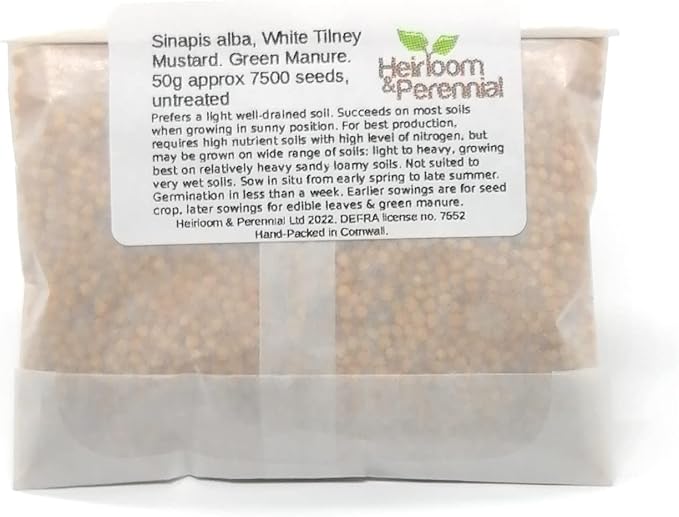
White mustard seeds are hard spheroid seeds, usually around 1.0 to 1.5 mm (0.039 to 0.059 in) in diameter,[4] with a color ranging from beige or yellow to light brown. They can be used whole for pickling or toasted for use in dishes. When ground and mixed with other ingredients, a paste or more standard condiment can be produced. Sinapis alba is used to make the commonplace yellow table mustard, with additional yellow coloring provided by turmeric in some formulations.
The seeds contain sinalbin, which is a thioglycoside responsible for their pungent taste. White mustard has fewer volatile oils than do black mustard seeds, and the flavor is considered to be milder.[5][6]