- FoodBook - find out about new food taste and experiences
Kokum
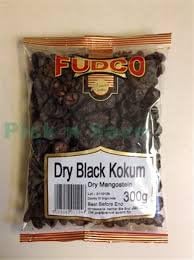
The outer cover of fruit is dried in the sun to get aamsul or kokam.[6] It is used as a souring agent typically in Maharashtra, Assam, Karnataka, Goa, Gujarat. Kokum yields a distinctive flavour and deep-red colour. As a souring agent, it is used as an alternative to tamarind in curries and other dishes from south India.[4] It is also used in cuisine from Gujarat, where it is frequently used to add flavor and tartness to dal (lentil soup) for flavor balance. It is extensively used in Assamese cuisine in many dishes like masor tenga (sour fish curry) and tenga dali (sour dal).
The vessel on the left contains syrup which is obtained from the vessel containing kokum rinds, on the right. The syrup is used to make kokum sherbet.
The fresh fruit is preserved with sugar to make bright-red squash that is diluted with water and bottled for sale as a beverage called Kokum Sarbat.
The extract of the fruit is called aagul in Konkani and Marathi. It is added during the preparation of solkadhi, which may also include coconut milk, coriander and garlic.